Paul Pangaro on Cybernetics, AI, and Ethical Conversations
The Macy Meetings
Goal means not that we have a fixed set-in-stone goal, more like goals are a necessary component of action, we are always acting or considering acting. (Andy Pickering)
The idea of purpose is what defined the field, uniting the disparate fields
cybernetics, neural nets, ai all intertwingled . Story about rise of AI from cybernetics. Expert systems, Hinton wars, etc. I know this story.
Wicked Problems. No shit.
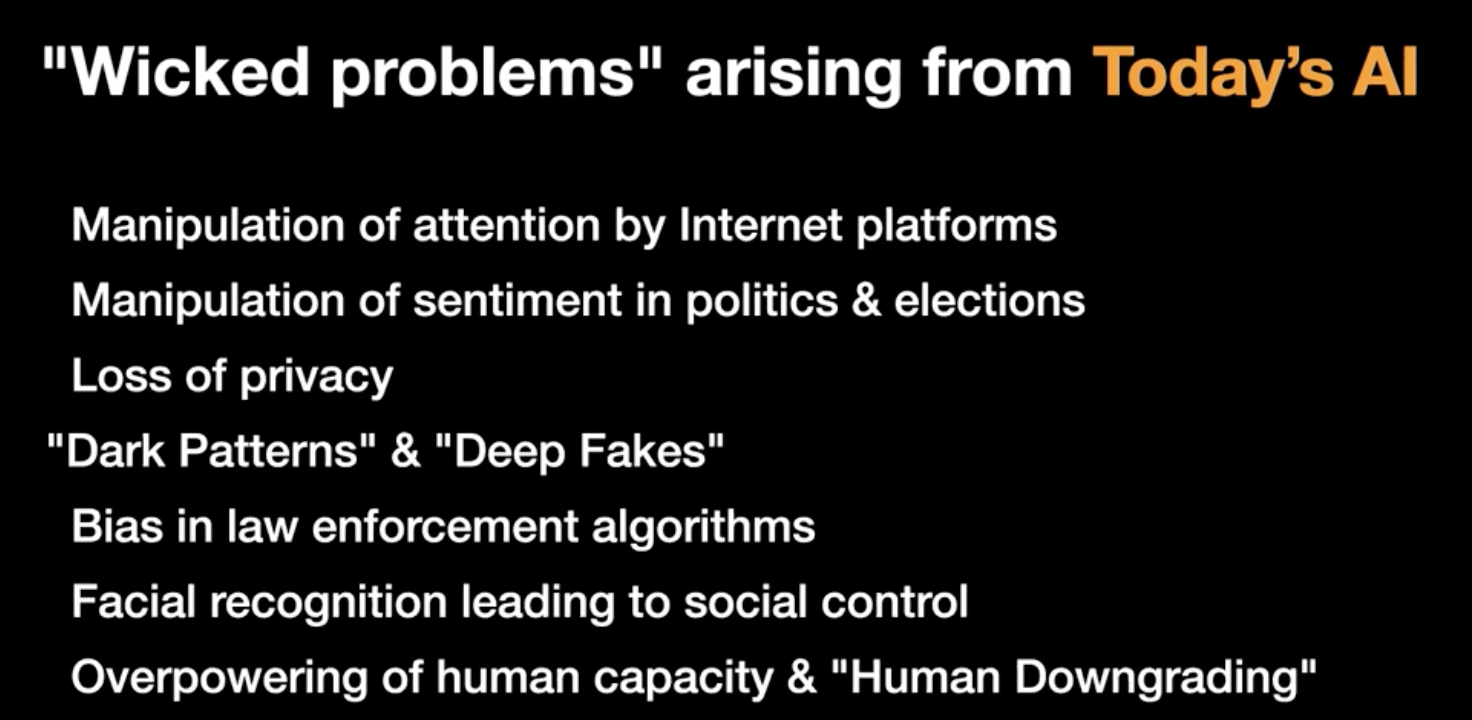
AI is a pandemic.
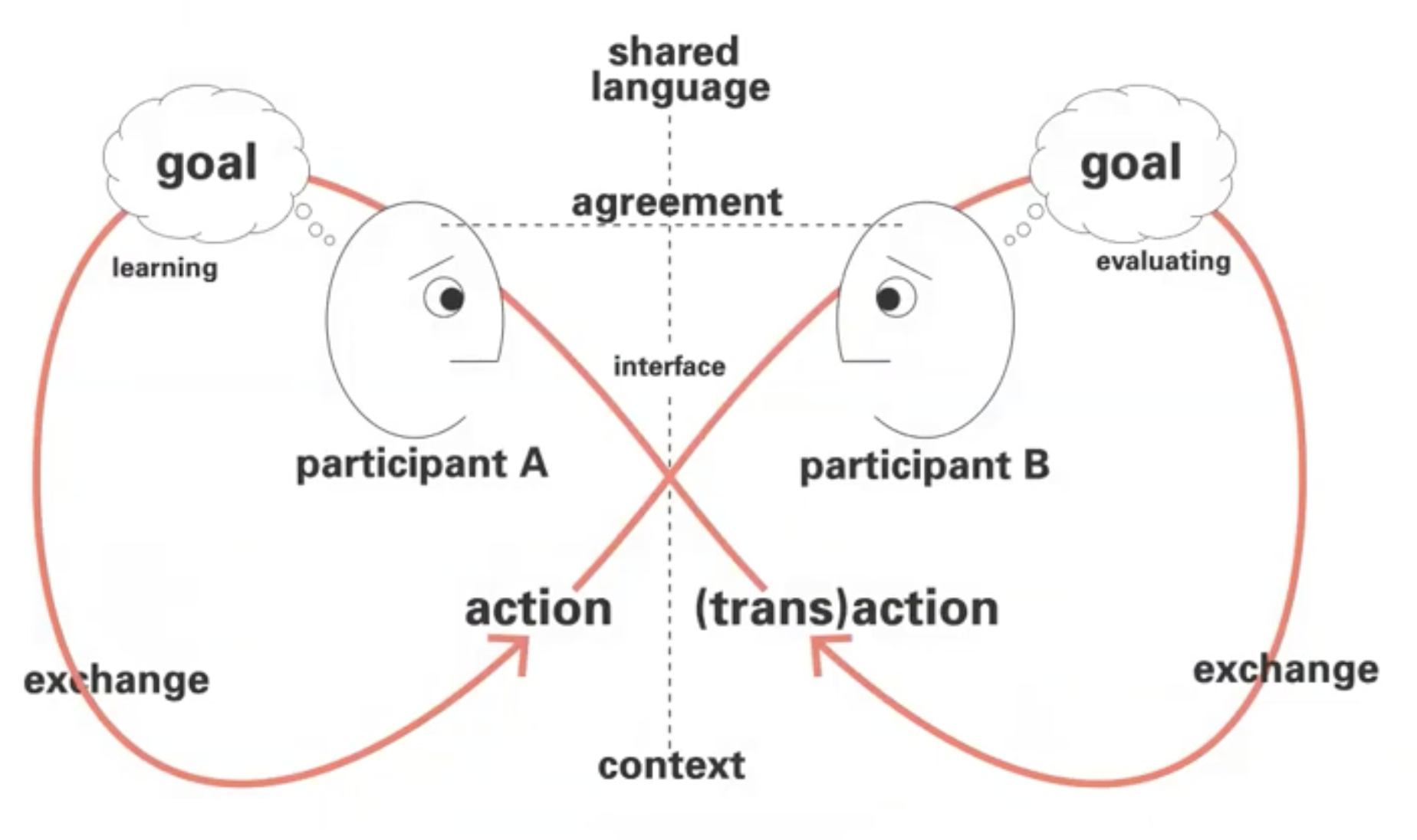
require conversations that are transdiciplinary, trance-national, trans-generationalsomething cosmic going on with the word "conversation", obviously he doesn't mean idle chit-chat but serious interchange between different disciplines and points of view.Conversation is the bridge between cybernetics and design–Ranulph GranvilleConversation necessitated by the need to cooperate, to act together.This is interestingly protocolish, although maybe more cooperation-minded in outlookWhat follows from conversation (when it works)shared history, relationship, trust, respect, unitysomething in me wants to scoff at this. I don't know why, we certainly need all that stuff. It's too idealistic? The real world has irresolvable conflicts that conversation won't solve. Protocols (engineered arguments) are like cybernetic conversations with the idealism excised and replaced by a sort of ruthless pragmatism.I think conversation means something closer to what I'd call interaction?
Essence of cybernetics (aside from being concerned with purpose)Antidisciplinarity (Andrew Pickering)Seeks to regulate, not dominateContains an ethical imperative
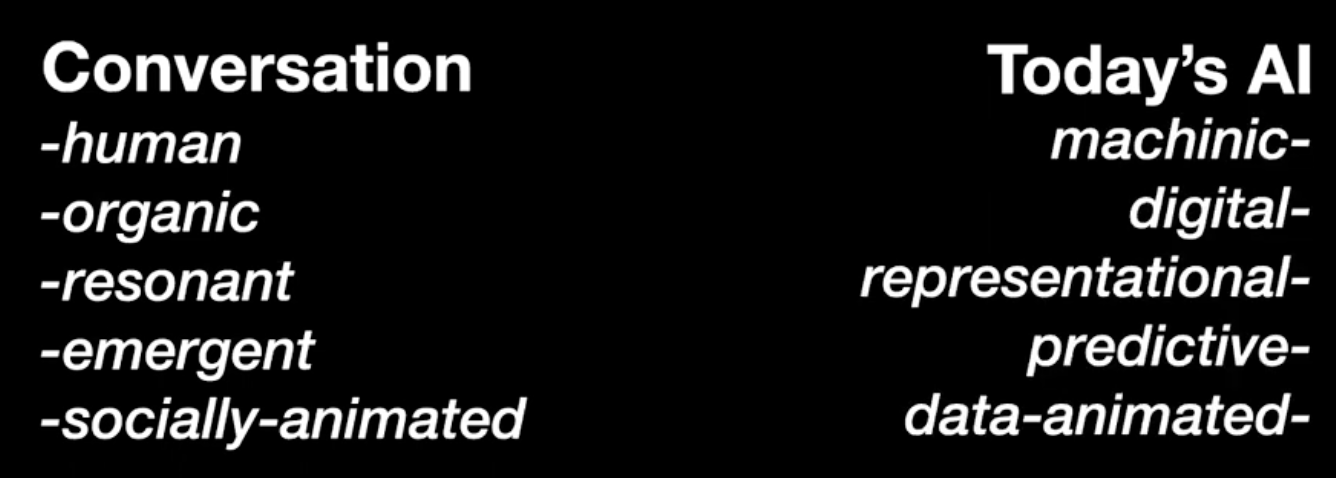
Conversation contrasted with AIBut cybernetics can bridge this divide, it is bilingualMinsky/Papert/Perceptrons story. von Foerster at Urbana got funding cut out through Minsky. See Marvin Minsky/on Cybernetics. There's much confusion between tech as an industry (Silicon Valley) and the intellectual side of AI.He doesn't say this explicitly but I sense that the point of conversation is goal-alignment? "Resonance" resonates with this.Stafford Beer /Flores/ Project Cybersyn as centralized control. Distinguishing cybernetic control from the more evil-sounding kind – why not say, self-control (for systems) rather than domination?Organizing PrincipleI shall act always to increase the total number of choices"choices' does not mean options (?) choice is a viable option, consistent with authentic self/being (?)Guess this is a famous line but I disagree; acting requires commitment which is decreasing available choices.Someone in q brings up Paradox of Choice"I shall" vs "Thou shalt". I like this. Non-moralistic, acknowledging that you are part of the world and taking responsibility (feels very Buddhist)Ah from Heinz von Foerster, "ethical imperative""Don't make a decision, let a descision make you"Applied to UI designAmazon is options, not choices, because not to do with me. It is superficially personalized based on my past choices, but has no idea of my present.Ethical design principlesapply models of human conversationstrive for interfaces that are cooperative, ethical, humanepush for new forms of conversational interfaceHm, this talk was pre-LLM era (2021). Now of course all interfaces are conversational or going that way. But I suspect not in the authentic way PP is talking about.Google doesn't explain its recommendations so not a good conversational partner (LLMs actually are getting better at that, there's a whole subfield explainability). He views non-explainability as unethical, which seems a bit of a stretch to me, esp in 2021 when Google wasn't pretending to be a human.